Insights
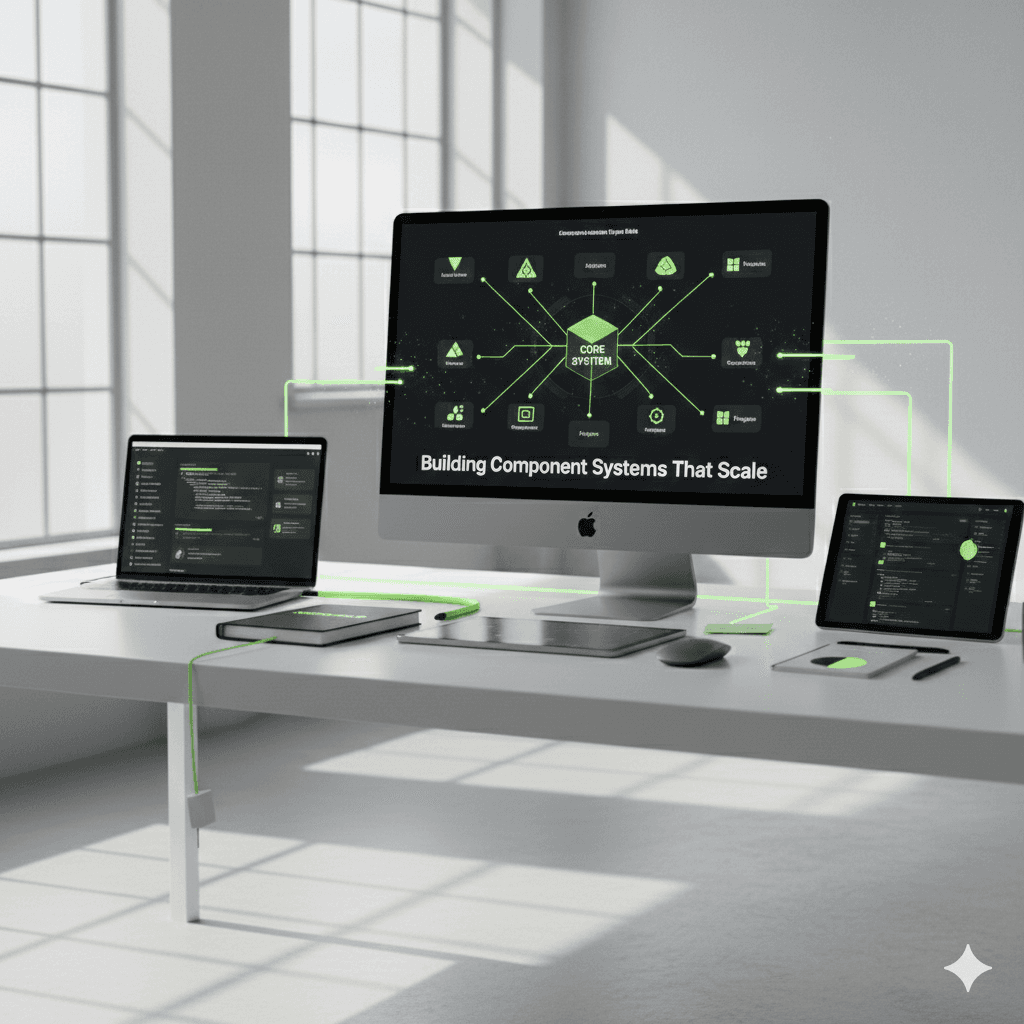
A well-designed website isn’t just visually consistent — it’s structurally repeatable. Component systems create efficiency, scalability, and long-term maintainability.
Introduction
Designing page by page may work short term.
Designing with systems works long term.
Component systems ensure that every section, card, and layout follows a unified structure. Instead of redesigning elements repeatedly, you build once — and scale confidently.
1. Design for Reusability
Every repeating element should become a component:
Buttons
Cards
Navigation bars
Feature sections
Testimonial blocks
Reusable components increase consistency and reduce production time.
2. Separate Structure From Content
A scalable component adapts to different content lengths and variations without breaking.
Good systems account for:
Variable text lengths
Different image ratios
CMS-driven content
Responsive behavior
Flexibility prevents future redesign headaches.
3. Maintain Visual Consistency
When components share:
Spacing rules
Typography styles
Color usage
Interaction behavior
The entire website feels cohesive.
Consistency builds trust and perceived quality.
4. Reduce Redundancy
Without components, small updates require manual edits across multiple pages.
With components:
Global changes are faster
Errors are reduced
Maintenance becomes easier
Efficiency increases as the project grows.
5. Think Long-Term
A scalable system anticipates:
Additional pages
Future features
CMS expansion
Layout variations
Websites evolve.
Your system should support that evolution.
Conclusion
Component systems are not just about organization — they are about sustainability.
When structure is intentional and modular, scaling becomes simple, maintenance becomes efficient, and design remains consistent.
Strong systems turn good designs into durable products.
Category
Development
Written By

Jordan Lee
Founder & Creative Director
Related Articles