Insights
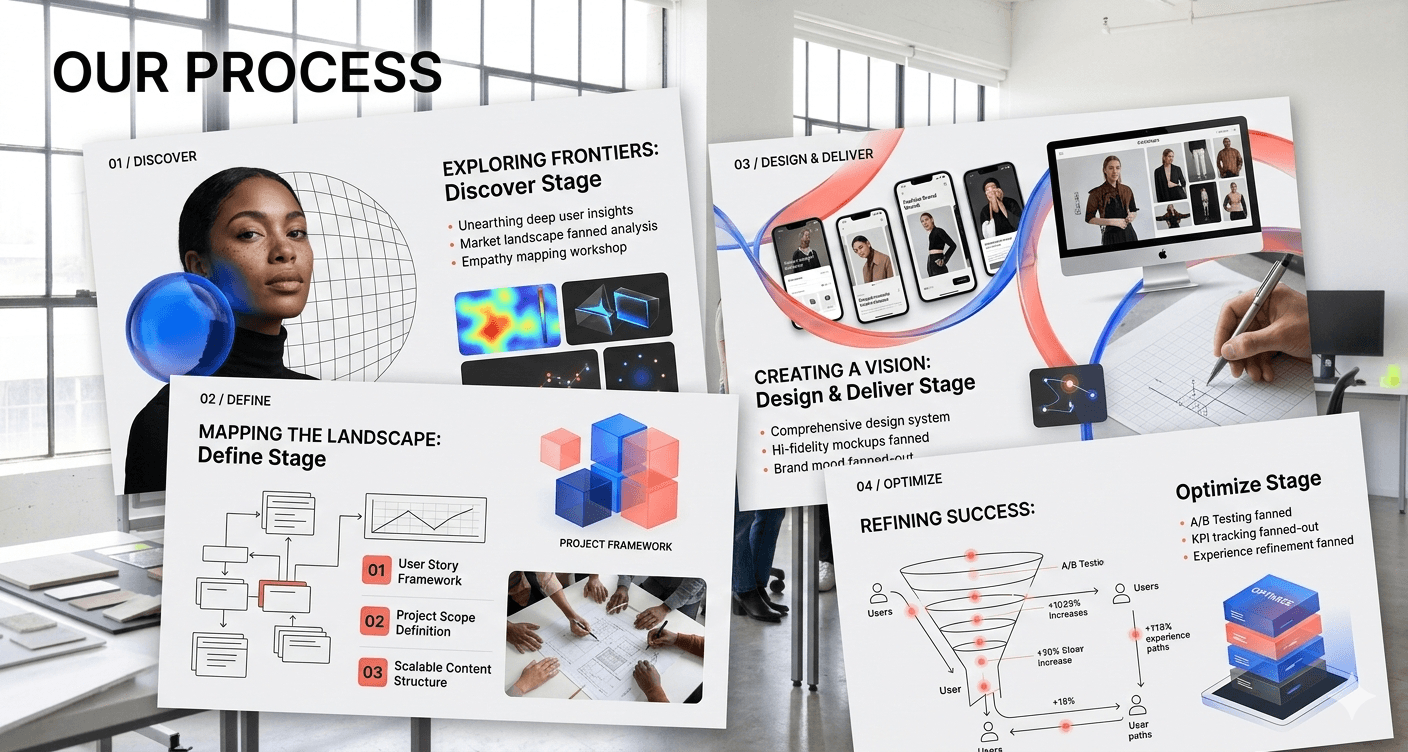
Conversion isn’t about pressure — it’s about clarity. When friction is reduced at every step of the user journey, engagement and action follow naturally.

Introduction
Users don’t convert because they’re convinced.
They convert because the path feels easy.
Every website has a conversion journey — from first impression to final action. When that journey contains friction, hesitation increases. When it feels seamless, decisions happen naturally.
Optimization is not about adding more.
It’s about removing obstacles.
1. Eliminate Unnecessary Decisions
Too many choices create cognitive overload.
Effective conversion paths:
Focus on one primary action
Limit competing CTAs
Guide users step-by-step
When options are simplified, clarity increases.
2. Clarify the Value at Every Stage
Visitors should always understand:
What they’re getting
Why it matters
What happens next
Uncertainty slows action.
Clarity accelerates it.
3. Strengthen Visual Hierarchy
Strong hierarchy reduces friction by directing attention intentionally.
Use:
Clear section breaks
Consistent button styling
Logical content progression
Adequate spacing
Users should never wonder where to look next.
4. Remove Hidden Barriers
Friction often hides in:
Long forms
Slow loading pages
Confusing navigation
Weak trust signals
Audit your journey regularly to identify subtle drop-off points.
5. Reinforce Trust
Conversion improves when hesitation decreases.
Trust signals include:
Testimonials
Case studies
Clear contact information
Transparent messaging
Confidence leads to action.
Conclusion
A high-converting website is not aggressive — it’s intentional.
When friction is minimized and clarity is maximized, users move forward with confidence.
Conversion is rarely about persuasion.
It’s about simplicity.
Category
Process
Written By

Maya Patel
Content & Insights Editor
Related Articles